Soil vs Potting Mix: Choosing the Right Growing Medium
When we start gardening, we usually pay the most attention to the plant itself.
How much sunlight does it need? How often should I water it? Should I fertilise it every week?
But there is another important factor that is sometimes overlooked: what the plant is actually growing in.
Many beginners assume that garden soil and potting mix are more or less the same thing. After all, both are used to grow plants.
In reality, they behave quite differently, especially when used in containers.
Understanding the difference between soil and potting mix can make plant care much easier and help prevent common problems such as poor drainage, compacted roots and overwatering. This is particularly important in Malaysia, where warm temperatures, high humidity and frequent rainfall can greatly affect how long a growing medium stays wet.
What Is Soil?
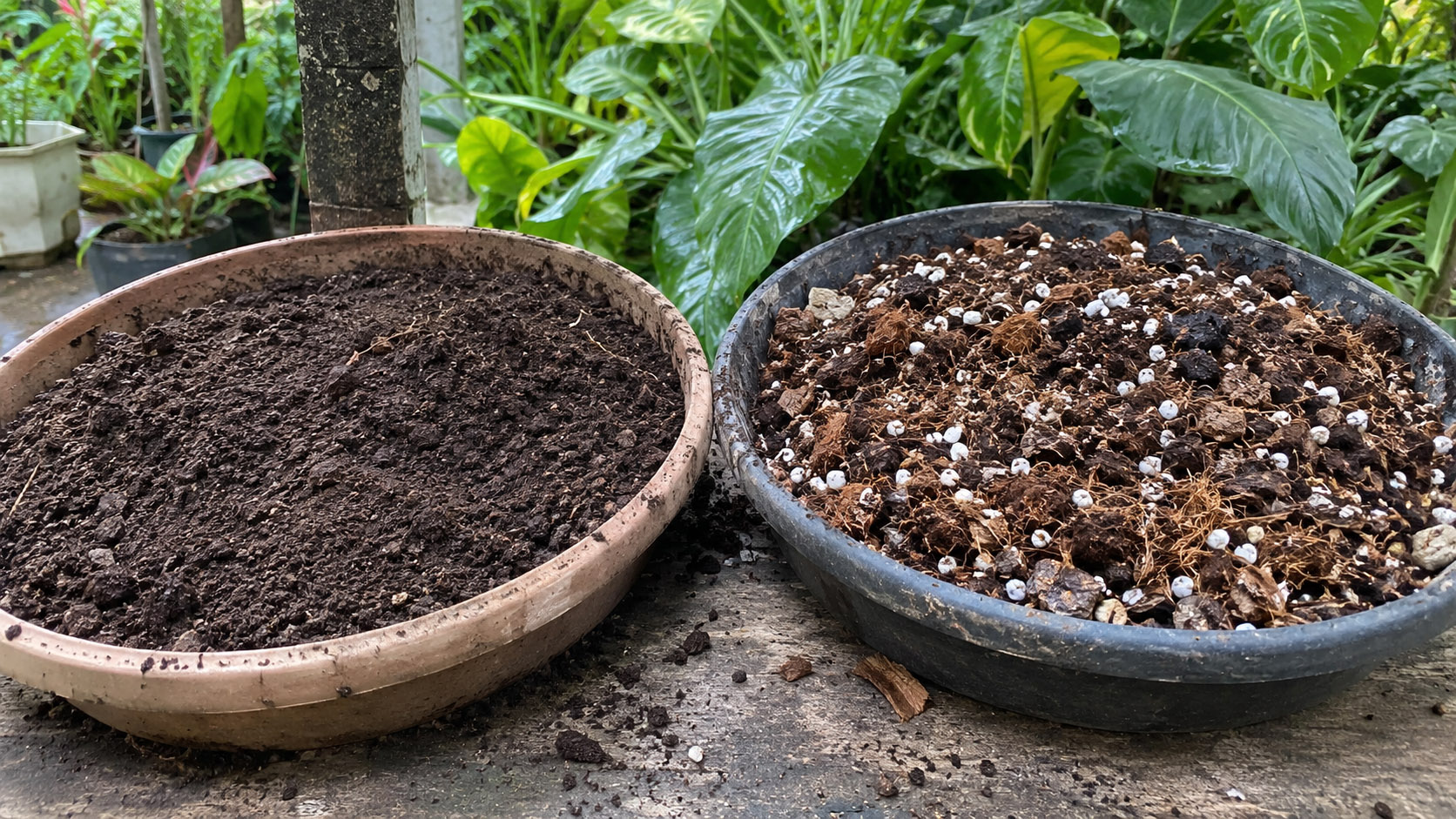
Soil is the natural material found on the ground.
It usually contains a mixture of:
- Sand, silt and clay
- Organic matter
- Water
- Air
- Microorganisms
- Naturally occurring nutrients
The exact characteristics of soil can vary tremendously from one location to another. Some soils are loose and sandy, allowing water to drain quickly. Others contain more clay and may become heavy and sticky after rain.
Even gardens within the same neighbourhood can have different soil conditions depending on the original land, drainage, previous construction work and the amount of organic matter present.
For plants growing directly in the ground, natural soil is usually the main growing medium. Rather than replacing it completely, gardeners normally improve it over time by adding compost, mulch or other organic materials.
What Is Potting Mix?
Potting mix, also called potting media or growing media, is a prepared mixture designed mainly for plants grown in containers.
Despite the name, potting mix may contain very little actual soil, or sometimes none at all.
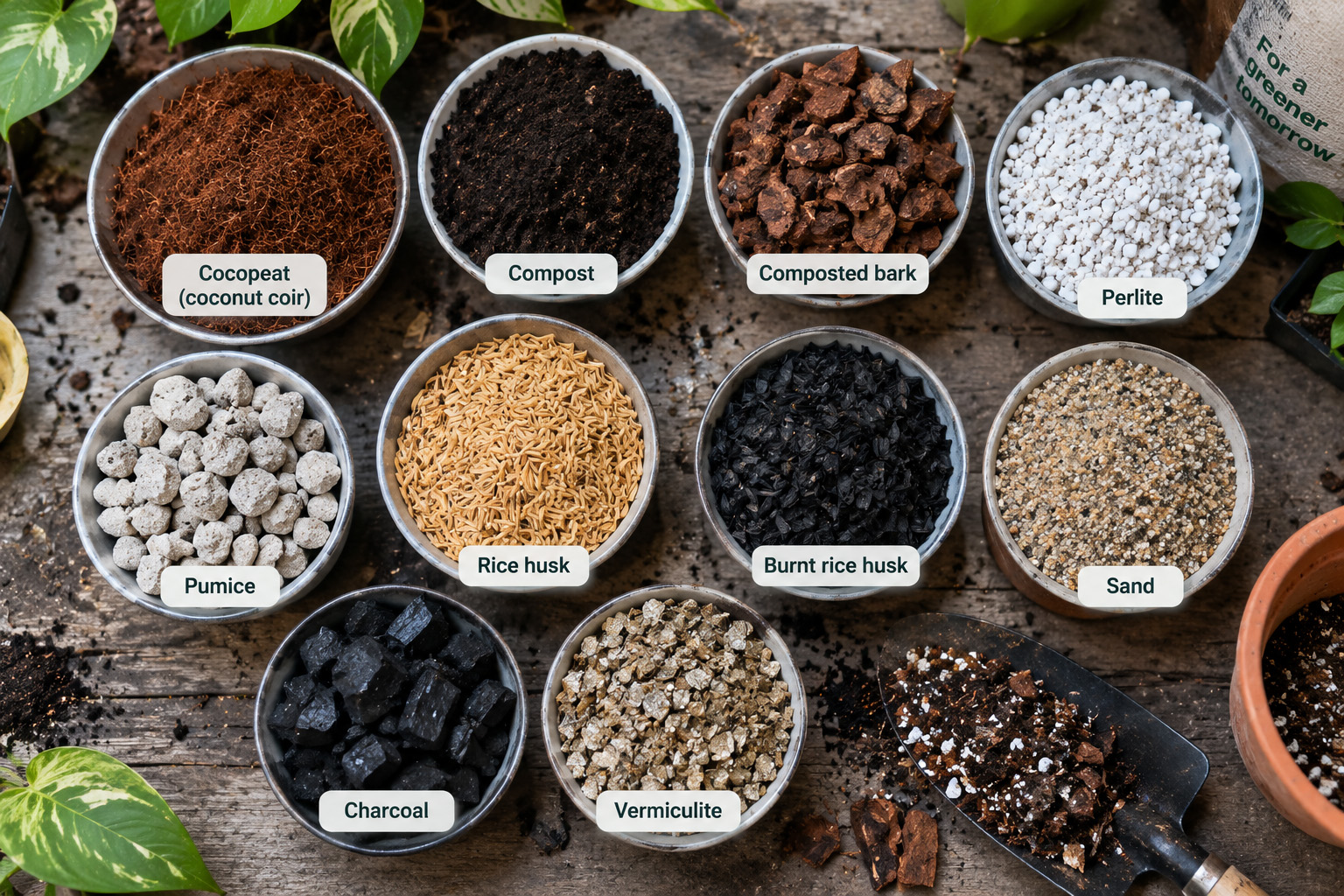
Common ingredients include:
- Cocopeat or coconut coir
- Compost
- Composted bark
- Perlite
- Pumice
- Rice husk
- Burnt rice husk
- Sand
- Vermiculite
- Charcoal
Each material behaves differently. For example, cocopeat can hold quite a lot of moisture, while bark, perlite and pumice help create larger air spaces within the mixture.
Why Soil and Potting Mix Behave Differently
The main difference becomes obvious when we compare plants growing in the ground with plants growing in pots.
In the ground, roots can spread into a much larger volume of soil. Water can move sideways or deeper into surrounding layers, and the soil is constantly interacting with microorganisms, insects, organic matter and nearby roots.
A container is much more restricted.
The roots are confined to a small space, and excess water can only leave through the drainage holes at the bottom. Because of this, a soil that performs perfectly well in the garden may behave very differently once placed inside a pot.
Why Garden Soil Can Be Difficult in Pots
There is nothing inherently wrong with garden soil. The problem is mainly how it behaves inside a confined container.
This does not mean garden soil can never be used in containers. It simply means that it often needs to be combined with other materials to improve its structure.
Why Potting Mix Is Usually Better for Containers
A good potting mix is designed to remain lighter and more porous than typical garden soil.
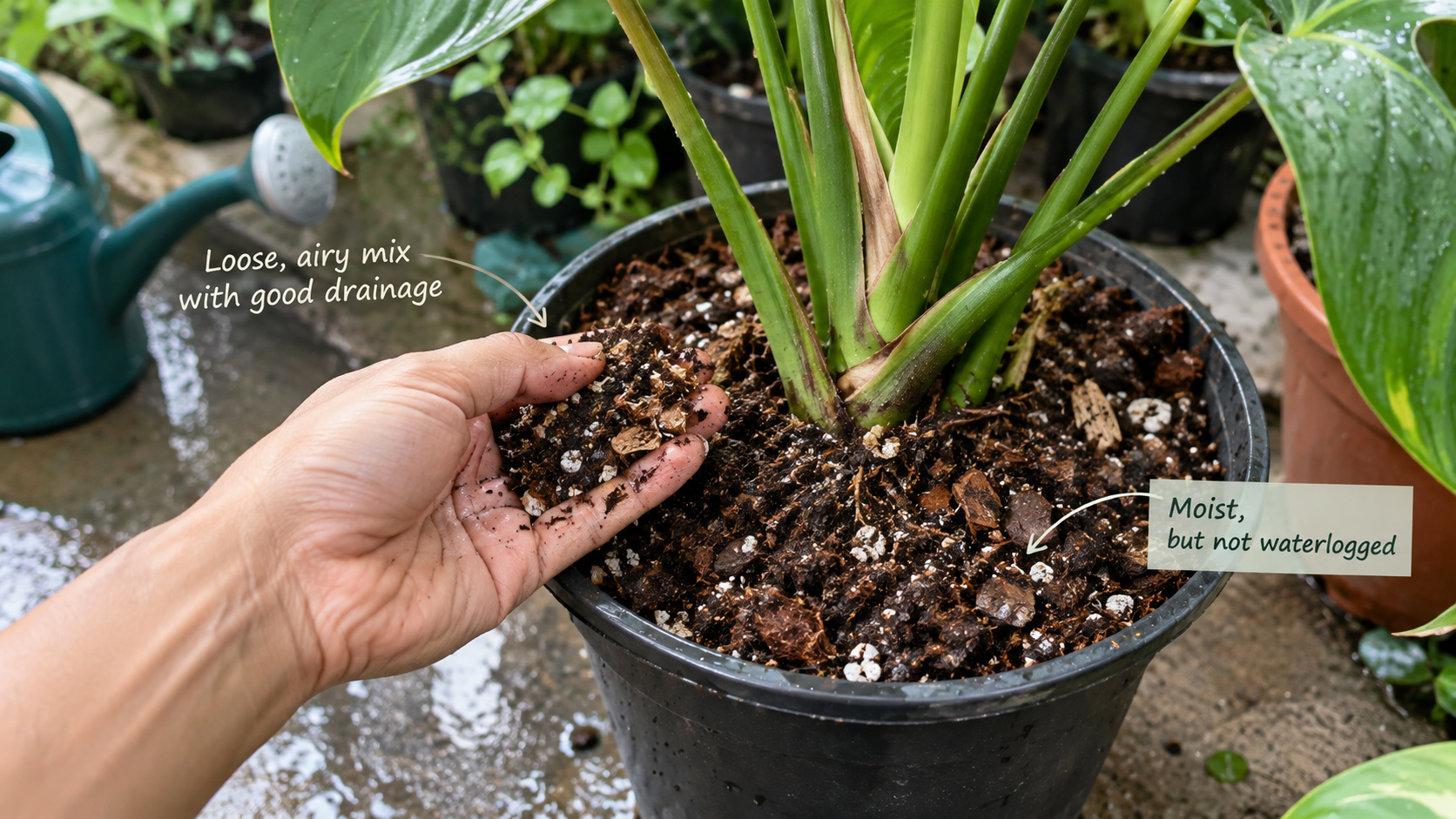
After watering, excess water should drain away while enough moisture remains between the particles for the roots to absorb.
At the same time, there should still be enough air spaces around the roots. This balance is especially useful in tropical gardening because moisture conditions can change very quickly. During a hot sunny day, a pot can dry much faster than expected. After two or three days of rain, the same pot may stay wet for much longer.
Faster Drainage Is Not Always Better
One common misconception is that a good potting mix should drain water as quickly as possible.
This is not necessarily true. Plants need water as well as air. If a mixture drains too quickly and holds very little moisture, the roots may dry out before the next watering.
The ideal balance also varies between plants:
- Succulents generally prefer a faster-draining medium.
- Ferns usually prefer more moisture retention.
- Aroids often appreciate moisture but also require good root aeration.
- Orchids usually prefer very open and airy media around their roots.
Can Garden Soil Be Used in Potting Mix?
Yes. Garden soil does not need to be completely avoided.
A small or moderate amount of suitable garden soil can sometimes be useful, especially in larger outdoor pots where additional weight and moisture retention may be beneficial.
It may be combined with materials such as:
- Compost
- Cocopeat
- Bark
- Perlite
- Pumice
- Rice husk
The important thing is the behaviour of the final mixture. If the resulting medium remains loose, drains reasonably well and still holds enough moisture, then it may work perfectly well. There is no universal ratio that every gardener needs to follow.
Commercial Potting Mix Is Not Always Perfect
Buying a bag labelled “potting mix” does not automatically mean that it is suitable for every plant.
Different manufacturers use very different materials. Some mixes are light and chunky, while others are mostly fine organic material.
If the mixture is very fine and dense, adding coarser materials such as bark, pumice or perlite may help improve aeration.
If it appears extremely loose and dries too quickly, adding a more moisture-retentive component such as cocopeat may help. Commercial potting mix should therefore be treated as a starting point, rather than something that can never be adjusted.
Tropical Climate Changes How Growing Media Behave
This is particularly important for gardeners in Malaysia.
A lot of gardening information online comes from temperate countries where temperatures, humidity and rainfall patterns are very different.
Malaysia generally experiences:
- High temperatures
- High humidity
- Frequent rainfall
- Strong sunlight
- Warm soil temperatures throughout the year
Organic materials also tend to break down relatively quickly under warm and humid conditions. As bark, cocopeat and other organic components slowly decompose, their particles become smaller. Over time, the potting mix may become denser and hold more water than it did when it was new.
The Pot Itself Also Matters
The growing medium is only one part of the system.
The type and size of pot can greatly change how quickly the mixture dries.
This is why two plants growing in exactly the same potting mix can still require different watering frequencies.
A Simple Way to Check Whether Your Mix Is Suitable
You do not need special equipment to judge a growing medium.
After watering the plant thoroughly, observe what happens.
Water should begin draining from the bottom of the pot reasonably soon. The medium should remain moist afterwards, but it should not stay completely saturated for an unnecessarily long period.
Check again after one or two days.
If the mixture is still extremely wet despite warm weather, it may be too water-retentive. If it becomes completely dry within only a few hours, it may be draining too quickly or the pot may be too small. Over time, these simple observations will teach you much more than blindly following a potting mix recipe.
Soil or Potting Mix: Which Should You Choose?
Common Beginner Mistakes
My Insights
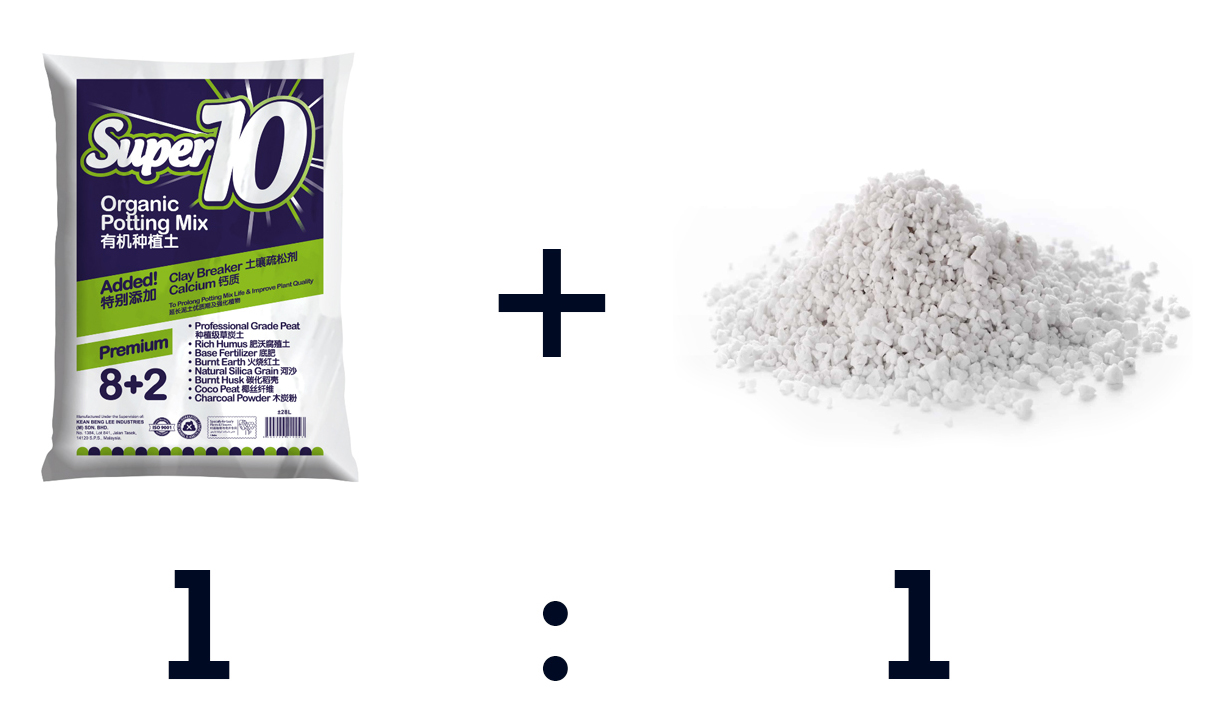
For beginners, too much trial-and-error with potting mixes can become complicated and take some of the joy out of gardening. For many years, I have used a simple mixture of a standard commercial potting mix (for example, Baba Super10) and perlite at about a 1:1 ratio.
If a plant needs better drainage or a better-aerated root zone, I simply increase the proportion of perlite. This combination is simple, easy to adjust and, in my experience, offers a good balance between price and performance. I would suggest getting the basic growing conditions right first before experimenting with more specialised substrates.
Some gardeners enjoy watering their plants almost every day, while others may only water every few days. A faster-draining mixture may suit someone who waters frequently, while a more moisture-retentive mixture may work better for someone who waters less often. The best potting mix is therefore not only about the plant — it should also suit the way you garden.
In Short
- Soil and potting mix are not the same thing.
- Natural soil is normally most suitable for plants growing directly in the ground.
- Potting mix is usually better for container plants.
- Good growing media should balance moisture retention, drainage and aeration.
- Faster drainage is not always better.
- Commercial potting mixes can be adjusted when necessary.
- Malaysian tropical conditions affect how long growing media remain wet.
- The pot, plant and your watering habits all influence the ideal mixture.
- Observe how the medium behaves rather than relying only on fixed recipes.
Final Thoughts
Choosing between soil and potting mix does not need to be complicated.
For plants growing directly in the ground, natural soil is usually the obvious starting point. For container plants, a well-structured potting mix generally provides better control over moisture and aeration.
Most importantly, pay attention to how the growing medium behaves in your own garden.
If it stays wet for too long, improve the aeration. If it dries too quickly, increase moisture retention. Healthy roots do not require a perfect recipe. They simply need a growing environment that provides the right balance of water, air, physical support and access to nutrients.